|
Coping with Highly Fluctuating Demand - Iceland Case Study
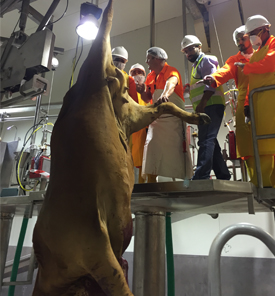
Every year the abattoirs in Iceland must process 500,000 sheep in just
3 months. During the rest of the year no live animals are processed.
Since 2002 the Icelandic abattoirs have been relying on Lee Booth
Partners to ensure that they are ready to satisfy this demand. The
plant, machinery, processes and people must all be 100% operational.
They need to get up to full capacity delivering the quality and
consistency of product required for optimum sale price whilst
maintaining high product and personal safety throughout this intensive
period.
|
|
|
|
| Lee
Booth Partners help the abattoirs achieve this through a range of
activities. This usually starts with an equipment survey and readiness
review report being produced. This highlights any potential changes and
categorises them under the headings of essential, highly beneficial and
nice to have. Once the facilities are in order the staffing is then
addressed. Lee Booth Partners supplies some key core operatives but
more importantly ensures that all staff are trained to deliver the
product quality in the quantities required whilst maintaining the
essential safety criteria. |
|
This
straight forward approach has delivered exceptional results in reducing
damage and contamination rates from as high as 23% before the readiness
review to as little as 3% after the new procedures have been
introduced.
This incredibly low rate is then maintainable with the production changes for the duration of the processing activities.
The results for the Icelandic abattoirs has not just been more
efficient and effective meat processing but an improved product
quality. With less carcass damage and improved hygiene standards the
benefits to the abattoirs are longer product shelf life and better skin
quality. This has led to the abattoirs having reduced assistance from
regulatory bodies and a better end product. This enables them to sell
their products easier and maximise the return on investment. |
|
|
|
|
|
Abattoir Modernisation - Greenland Case Study
After many years of man intensive meat processing operations Neqi A/S
of Greenland decided that they needed to modernise their abattoir. To
understand the current technology options and how they could be used in
their particular facility they contacted Lee Booth Partners.
The first activity undertaken was for Lee Booth himself to visit the
abattoir in Greenland and conduct a complete professional assessment of
their current operations. Observations of the meat processing, informal
discussions with the operatives and detailed measurements all formed
part of a formal requirements capture process that fully involved the
abattoir's management team. |
|
It
would have been easy at that stages to install a few machines and Neqi
A/S would have seen a marked improvement in productivity and quality.
But in consultation with the management team it was decided to
investigate a step change at the abattoir.
Lee Booth Partners then pulled together a team of specialists to
specifically address the Neqi A/S requirements. They then looked at
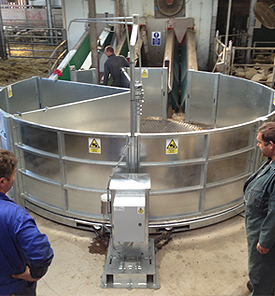
every aspect of the abattoir from the initial livestock handling,
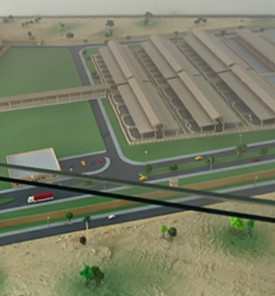
abattoir design/layout, slaughter line operations, by-product/waste
removal and the entire infrastructure required to support abattoir from
basic utilities to heating and incineration.

|
|
|
|
By
breaking down the requirements of Neqi A/S into these separate elements
they were able to optimise the abattoir design to come up with the most
cost effective solution to efficiently satisfy the requirements of the
customer.
Once completed the detailed design, plans and programme schedule were
taken back to the customer where Lee Booth personally took the
management team through the proposed solution. The management team at

Neqi A/S were amazed at the detailed nature of the proposal and
extremely happy with the price which worked out not much more than to
ship and install a few new machines.
|
|
On
confirmation of the instruction to proceed Lee Booth Partners fully
managed the complete project. The project plans identified all of the
long lead time items which were ordered and came together with the line
manufacture for factory testing. Lee Booth Partners performed all of
the testing in accordance with the formal test schedules agreed with
the customer. The complete line and ancillary equipment was then
shipped to site. Lee Booth Partners then worked in conjunction with the
Neqi A/S management team to install the new system and set it to work.
Once fully operational the final task was to train the operatives in
the use of the new line. Particular attention was made to train the
staff on how to ensure the inverted sheep dressing system worked to
ensure the highest product quality was achieved.
Once the whole, fully modernised, meat processing capability was in
place the final acceptance and formal handover of the facility was
performed. On completion Neqi A/S Managing Director commented on what a
fantastic service Lee Booth Partners had provided. The abattoir had
been able to maximise its capital investment and had a facility that
would provide high quality and highly productive meat processing for
the next 20 years. By taking a complete capability approach Lee Booth
Partners has transformed meat processing in the abattoir and I would
recommend them to anyone wishing to modernise their abattoir
facilities?.
|
|
New Build Abattoir - UK Case Study
In today's UK meat processing climate the decision to build a new
abattoir must be based on sound business advice. It is no good finding
out after construction that the facility will not process enough
livestock to be profitable. Neither is it any good on completion to
find out that it does not satisfy current or soon to be introduced
legislation. For this reason the owners of Laverstoke Park abattoir

employed the services of Lee Booth Partners at the preliminary stage of
the project. |
|
|
|
| In
today's UK meat processing climate the decision to build a new abattoir
must be based on sound business advice. It is no good finding out after
construction that the facility will not process enough livestock to be
profitable. Neither is it any good on completion to find out that it
does not satisfy current or soon to be introduced legislation. For this

reason the owners of Laverstoke Park abattoir employed the services of
Lee Booth Partners at the preliminary stage of the project. |

|
The
first activity undertaken by Lee Booth Partners was to review the
business plan. From this the specialists were able to identify the
scale of the operations being undertaken and the proposed capital
expenditure. The team then pulled together figures for the capacity
planning forecasts including the costs of operating the facility,
staffing requirement, by-product/waste disposal and the forecasted
income generated from the final meat products. This provided the
forecasted capacity of livestock that would be required to be processed
to satisfy the proposed Return on Investment.
|
|
|
The
Lee Booth Partners team then took the Laverstock Park owners through
the complete breakdown of figures covering all aspects of the meat
processing. A number of recommendations were made at these stages to
ensure the owners maximised the earning potential of the abattoir and
maintained options for future changes depending on the developing
economic climate. Using the sophisticated models the Laverstoke Park
owners were able to optimise their business planning to ensure new
abattoir delivered a long-term viable business opportunity.
Having agreed the new abattoirs forecast capacity Lee Booth Partners
quickly turned this into a fully design abattoir to cope with the
numbers of livestock agreed. By bringing together a team of subject
matter experts the process of design is fast but also it is extremely
effective. No aspect of the operation is left out but most importantly
it is specifically designed in. Lee Booth Partners has a policy of
never leaving an aspect of the project to be agreed later. The issues
are always worked through before the final design review. Therefore the
final detailed design covered the complete meat processing operation
for Laverstock Park.
At this point Lee Booth himself returned to the Laverstock Park owners
to take them through the completed detailed design, plans and programme
schedule. Using the forecast capacity Lee explained the complete
overall abattoir design from livestock handling, slaughter line
operation, by-product/waste disposal through to the refrigeration
control systems. As well as the floor plan layout all of the utility
requirements were specified along with the equipment quotations
covering all aspects of setting the abattoir to work. Nothing is left
out at this stage so the owners had a complete breakdown from
line/equipment costs to the cost of consumables and operator training.
On receipt of the instruction to proceed the Lee Booth Partners team
immediately initiated the programme schedule. The long lead time items
were ordered and the process of line construction initiated. Lee Booth
Partners then monitored progress to the schedule to ensure that the
completion dates agreed were met.
As well as bring together all of the physical abattoir equipment Lee
Booth Partners needed to satisfy all of the legislative requirements
for the Laverstock Park abattoir. This started off with the Planning
Permission submission but also goes onto the provision of documenting
the meat processing stages through detailed procedures and work
instructions for the operators. The culmination of this activity is the
Hazard Analysis and Critical Control Points (HACCP) which is required
in order to become a licensed premise.
To ensure no problems occurred during the abattoir construction Lee
Booth Partners review each stage of the process prior to the next stage
being initiated. Any outstanding work that is carried forwards is
recorded to ensure it does not affect the final stages.

|
|